

Views: 0 Author: Site Editor Publish Time: 2026-11-06 Origin: Site


On heavy-duty commercial job sites, the catastrophic failure of standard fastening systems presents a monumental safety risk. Traditional friction-based anchors struggle to maintain their hold when subjected to extreme loads or constant vibration. Base materials naturally shift over time. Micro-cracking occurs. This inevitably leads to severe structural compromises.
To address these critical vulnerabilities, structural engineers turn to the Undercut Mechanical Anchor as the ultimate heavy-duty fastening solution. Conventional fasteners rely solely on outward friction against the straight walls of a drilled hole. This sophisticated device takes a completely different approach. It utilizes a mechanical interlock system. This mechanism creates a permanent physical lock deep within the concrete base, fundamentally altering how load stresses are absorbed and distributed throughout the structure.
This technical guide breaks down exactly how mechanical interlocking works. We will detail the different variations available, explore their core structural benefits, and provide a clear framework for choosing the right fastening system for high-stakes projects.
Superior Holding Power: These specialized anchors provide unmatched load capacity by creating a physical keying effect inside the concrete. This completely bypasses the limitations of traditional friction-based fastening.
Cracked Concrete Reliability: They are the definitive engineering choice for cracked concrete, active seismic zones, and high-vibration dynamic load applications. Standard expansion wedges are highly prone to slipping in these environments.
Optimized Stress Distribution: Because they rely on physical interlocking rather than constant outward pressure, they exert minimal bursting stress on the base material. This allows for significantly smaller edge distances and closer spacing.
Specialized Installation: Proper execution requires precision drilling techniques to carve a precise bell-shaped void at the base of the hole.
Versatile Engineering: The choice between purely mechanical systems and hybrid chemical variations depends heavily on specific environmental exposures and project-specific structural requirements.
Recent shifts in global structural engineering standards reveal a massive transition away from traditional friction anchors. As urban environments expand into seismically active zones and existing infrastructure rapidly ages, regulatory bodies are tightening building codes. Modern guidelines now place intense scrutiny on anchor performance in cracked concrete.
Industry analysts note that major infrastructure projects increasingly mandate zero-slip performance. Engineers are moving away from standard wedge anchors because they cannot guarantee stability when concrete enters a tension phase. Consequently, the market is seeing a surge in demand for mechanical interlock technologies. These systems provide predictable, fail-safe load transfers, aligning perfectly with the stringent safety margins required by modern seismic and structural compliance standards.
In simple terms, it is a highly specialized post-installed concrete fastener engineered to bear massive tensile and shear structural loads. Standard wedge anchors are essentially straight cylinders that expand outward. In contrast, these heavy-duty variants are designed to interact with a specially modified drill hole.
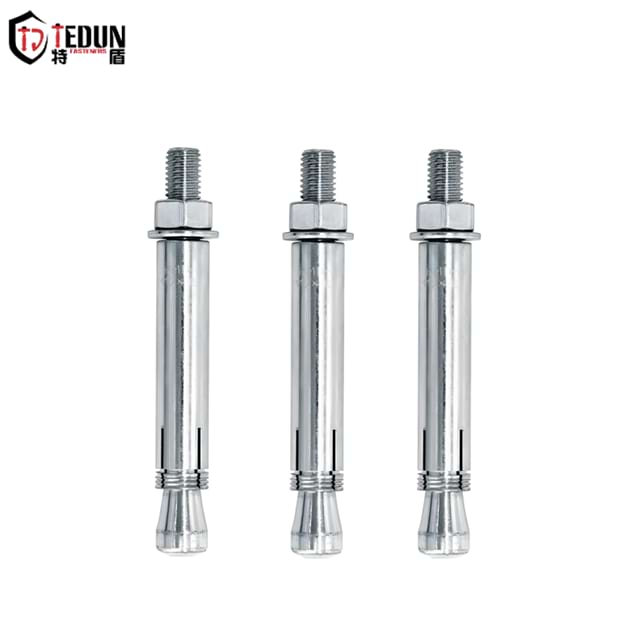
Picture a heavy-duty steel stud equipped with a specialized cylindrical expansion sleeve and a conical end. The term undercutting in construction refers to the precise machining process of creating a wider bell-shaped cavity at the very bottom of a standard cylindrical drill hole. This unique geometry forms the fundamental basis for the fastener's extreme performance capabilities.
The bell-shaped void is the critical structural feature that differentiates this system from all others. When the anchor is installed and torque is applied, the expansion sleeve is driven forcefully over the internal cone. This causes the lower section of the sleeve to flare outward specifically into this custom-drilled cavity.
This creates a perfect three-dimensional fit between the steel sleeve and the concrete matrix. Because the flared sleeve is now physically wider than the cylindrical hole above it, the anchor cannot be pulled out without completely destroying the surrounding concrete. This structural phenomenon ensures maximum security under extreme tension.
To fully grasp the structural advantages of these fastening systems, engineers must understand the physics of load transfer. The foundational principle at play here is known as mechanical interlock.
Standard expansion anchors operate purely on a friction-grip principle. As torque is applied to the nut, the anchor expands and presses outward against the straight vertical walls of the drilled hole. If the hole is slightly oversized by even a fraction of a millimeter, that friction is instantly lost. The anchor slips. The connection fails. An undercut system, however, relies on a physical barrier. The flared sleeve sits securely beneath a solid ledge of concrete created by the bell-shaped void. It relies entirely on structural geometry rather than surface friction.
When pull-out force is applied, the mechanical interlock distributes the tension deep into the base material at an optimal compressive angle. Instead of scraping against the sides of the hole, the flared sleeve pushes directly up against the solid concrete overhang.
This macro-keying effect prevents failure. Even if the concrete enters a tension phase and micro-cracks propagate directly through the drill hole, the physical geometry of the interlock ensures the anchor remains securely seated. The structural load-bearing capacity is maintained without compromise.
While the underlying physics of the mechanical interlock principle remains consistent, the specific methods utilized to create the bell-shaped cavity can vary. Engineers select different variations based on installation constraints, base material properties, and project timelines.
This classification requires a highly controlled two-step drilling process. First, a standard cylindrical hole is drilled to the specified embedment depth. Next, a specialized undercutting drill bit is inserted. Operators carefully route out the base using this tool. They can often feel the distinct change in resistance as the cutting head flares outward to carve the precise bell shape. Once cleaned, the anchor is inserted, and a setting tool drives the expansion sleeve down over the cone. This method offers the highest level of precision and is heavily favored in critical structural applications.
To streamline the installation process and save valuable labor time on the job site, manufacturers developed self-undercutting variations. These models feature hardened abrasive cutting teeth integrated directly onto the bottom of the expansion sleeve. Instead of using a separate tool, a heavy-duty undercut mechanical anchor of this type is attached directly to a rotary hammer drill. As it is driven into the standard hole, the downward force and rotational hammering action cause the sleeve's teeth to grind into the concrete. It effectively drills its own undercut void as it expands.
For environments requiring the absolute highest level of security, hybrid approaches exist. This system involves drilling an undercut hole and then filling it with a high-strength structural adhesive resin before inserting a specialized threaded rod. The resin cures around the rod and completely fills the bell-shaped void. This combines the physical security of a mechanical interlock with the continuous bonding and moisture-sealing properties of a chemical anchor.
The decision to specify an undercut system over standard fastening methods is driven by several distinct structural advantages. These are critical for heavy-duty engineering projects where failure is not an option.
Foremost is their exceptionally high load capacity. These systems consistently offer the highest tensile and shear load capacities of any post-installed concrete anchor available. Because the load is transferred through direct bearing against the concrete rather than friction, the anchor utilizes the full compressive strength of the base material.
Furthermore, their performance in cracked concrete is unparalleled. Concrete structures are dynamic. They bend and flex under loads, causing the concrete on the tension side to develop micro-cracks. Undercut systems excel in these environments because the mechanical interlock cannot slip through the crack.
A major structural benefit is the dramatic reduction of expansion stress. Friction-based anchors must constantly exert massive outward pressure against the concrete just to stay in place. Undercut anchors lock passively into their cavity. They exert virtually zero bursting stress on the surrounding concrete until an actual load is applied.
Because they do not generate constant high-level expansion forces, the risk of blowing out or fracturing the concrete edge is significantly reduced. This characteristic allows structural engineers to design connections where anchors are placed much closer together. They can also be installed much closer to the unsupported edge of a concrete slab, providing greater design flexibility in tight spaces.
During the specification phase of a project, project managers must weigh performance benefits against installation costs. Providing a clear comparison helps clarify why high-stakes projects mandate undercut technology.
Feature / Parameter | Standard Expansion Wedge Anchors | Undercut Mechanical Anchors |
|---|---|---|
Primary Holding Mechanism | Friction-grip against straight hole walls | Physical mechanical interlock in a bell-shaped void |
Performance in Cracked Concrete | High risk of slippage and load capacity loss | Excellent; maintains load capacity even if cracks widen |
Expansion Stress on Concrete | Very High due to constant outward pressure | Very Low; stress only applied during active loading |
Edge Distance & Spacing | Requires large distances to prevent concrete blowout | Allows for significantly closer edge and spacing distances |
Tolerance to Oversized Holes | Poor; slight over-drilling causes complete failure | High; the undercut void compensates for minor hole variations |
Installation Complexity | Simple drill, clean, torque process | Complex; requires specialized undercutting tools and precision |
While an undercut system costs more upfront and requires a rigorous installation process, the return on investment is realized through unmatched structural safety. In critical applications where anchor failure could result in structural collapse, the reliability of a mechanical interlock far outweighs the initial material and labor costs.
The robust nature of this technology makes it non-negotiable in sectors where safety, durability, and extreme load management are paramount.
Manufacturing facilities rely on massive high-vibration equipment. Securing industrial machinery, heavy-duty cranes, stamping presses, and large-scale conveyor belts requires anchors that will not vibrate loose over time. The mechanical interlock effectively resists the continuous dynamic shear and tensile loads generated by these machines.
In commercial high-rise construction, the connections between the primary concrete structure and secondary steel components are critical. Specifying a high-strength undercut mechanical anchor is routine for securing heavy steel columns, base plates, cantilevered beams, and architectural facade panels subject to severe wind and shear loads.
For projects where failure carries catastrophic consequences, standard friction anchors are rarely permitted. Undercut systems are the standard for nuclear power plants, suspension bridges, underground tunnels, and hydroelectric dams. These applications demand fasteners that can withstand seismic events and continuous dynamic fatigue without compromise.
The superior holding power of a mechanical interlock is entirely dependent on strict adherence to installation protocols. Precision is critical. If the undercut is not formed correctly, the anchor simply cannot function as designed.
Drilling the Primary Hole: Using a standard heavy-duty rotary hammer drill equipped with a carbide-tipped bit, the operator drills a cylindrical hole into the concrete to the exact embedment depth specified by the engineering plans.
Cleaning the Hole: This is a crucial step for proper seating. The hole must be thoroughly cleaned using the blow-brush-blow method. Compressed air blows out the dust, a wire brush loosens debris from the walls, and a final blowout ensures the hole is entirely clear of concrete powder.
Creating the Undercut: For pre-undercutting systems, the specialized undercutting tool is inserted. The drill is used in a circular motion to carve the bell-shaped cavity at the base. For self-undercutting anchors, the anchor itself is attached to the drill and driven down to grind out the void.
Inserting and Setting: The anchor is placed into the cleaned hole. A proprietary setting tool is used to force the expansion sleeve downward over the internal cone, expanding it precisely into the newly created void.
Applying Torque: Finally, the fixture or base plate is placed over the threaded stud. The washer and nut are applied, and a calibrated torque wrench is used to tighten the assembly until it clicks into the manufacturer's specified installation torque.
Selecting the correct fastener requires a careful evaluation of the specific project environment, structural loads, and regulatory requirements. It is not a one-size-fits-all approach.
Material selection is dictated by environmental conditions. For instance, Grade 5.8 or Grade 8.8 carbon steel with zinc plating is suitable for dry indoor environments. Hot-dip galvanized steel offers better resistance for humid indoor or mild outdoor applications. For highly corrosive marine or chemical environments, utilizing Type 304 or 316 stainless steel is mandatory to prevent structural degradation.
Engineers must also assess the compressive strength of the concrete and determine the required embedment depth. Undercut anchors are specifically designed to excel in cracked concrete tension zones, but specific load values vary based on the concrete's overall condition and slab thickness. Standard sizes typically range from M10 to M20 to accommodate varying shear and tensile requirements.
For commercial and infrastructure projects, anchors must carry recognized third-party certifications. Buyers should verify that the selected anchors hold ICC-ES reports or ETA approvals for cracked concrete. Procuring a Undercut Mechanical Anchor should only be done through reputable specialized fastener manufacturers who can provide comprehensive technical data sheets and material traceability.
The sophisticated mechanical interlock design makes these anchors highly reliable, establishing them as the safest choice for extreme loads and demanding environments. By completely bypassing the limitations of friction and forging a physical barrier deep within the base material, this design prevents catastrophic failure even in heavily cracked concrete.
While the installation process undeniably requires more effort and specialized tooling, the resulting safety, longevity, and structural peace of mind are invaluable. We strongly encourage project managers and engineers to evaluate their current project loads carefully today. Visit Tedun Fasteners to explore high-strength fastening solutions and consult with a fastener expert to ensure your structural integrity remains uncompromised for decades to come.
Generally, the anchor itself is permanent once the sleeve is expanded into the concrete undercut. The threaded rod, bolt, or nut can be removed to detach the fixture or machinery, but the expansion sleeve and internal cone remain permanently locked in the base material. They cannot be extracted and reused in a different location.
Yes. You typically need a specialized undercutting drill bit to create the bell-shaped cavity and a specific setting tool provided by the manufacturer to expand the sleeve properly. Even if you are utilizing a self-undercutting model, you still require a heavy-duty rotary hammer drill and a specialized setting attachment to drive the abrasive teeth into the concrete.
Drop-in anchors rely purely on friction and physical deformation at the bottom of a straight cylindrical hole. They are designed primarily for lighter static loads in uncracked concrete. Undercut variants create a physical mechanical interlock within a custom bell-shaped void and are engineered specifically to withstand heavy dynamic and seismic loads in cracked concrete tension zones.
Yes, they are highly recommended and frequently mandated by building codes for active seismic zones. Their mechanical interlock design prevents them from slipping or pulling out of the hole during earthquakes, even when the surrounding concrete experiences severe cracking, structural shifting, and intense dynamic shock waves.
The required concrete thickness depends on the specific anchor diameter and embedment depth. Generally, the concrete slab must be thick enough to accommodate the deep embedment of the anchor plus a safety margin to prevent drill-through or concrete spalling at the bottom of the slab. Always refer to the manufacturer's ETA or ICC-ES technical data sheet for exact minimum thickness requirements.
No. Undercut mechanical anchors are engineered specifically for solid, high-strength concrete. Masonry, brick, and hollow block lack the compressive strength and structural integrity required to support the extreme localized forces generated by a mechanical interlock. For masonry applications, chemical injection anchors or specialized masonry sleeve anchors are the correct engineering choice.