

Views: 0 Author: Site Editor Publish Time: 2026-11-02 Origin: Site


Every smooth elevator ride depends entirely on a hidden network of structural fasteners anchored deep inside the hoistway. While passengers notice cabin styling and travel speed, vertical transportation engineers know the structural backbone rests on the steel hardware embedded into the shaft concrete. Selecting an inadequate Elevator Anchor creates severe guide rail misalignment, unwanted vibration, project delays, and dangerous liability risks. This engineering guide compares modern fastening solutions, evaluates mechanical versus chemical behavior, and outlines proven selection standards for safe, code-compliant hoistway construction.
Guide rail anchors absorb tremendous cyclic fatigue, lateral car sway, and emergency safety gear braking forces.
Mechanical wedge anchors deliver instant load-bearing capacity, while chemical injection systems eliminate expansion pressure near slab edges.
Specifying anchors certified for cracked concrete and seismic action categories C1 and C2 is essential for modern high-speed shafts.
Accurate hole cleaning, exact embedment depth, and calibrated torque application directly determine whether an installation holds or fails.
Guide rail brackets transfer all dynamic forces generated by moving cars and counterweights directly into the building structure. When an elevator travels at high speed, minute structural shifts or rail misalignments translate into noticeable cabin shudder. Under emergency braking conditions, the anchor assembly must withstand instantaneous shock loads several times higher than static weights.
Recent developments across the vertical transportation industry show a decisive shift toward high-ductility fasteners capable of resisting multi-axis dynamic loads. Taller building profiles and faster cabin velocities produce sustained, high-cycle vibrations inside hoistway walls. Generic masonry fixings simply cannot handle these stresses over decades of service. Structural engineers now focus on specialized anchorage systems built from fatigue-resistant alloy steels that prevent guide rail bracket deflection and long-term metal fatigue.
Shaft construction typically relies on three core anchoring methods, each tailored to specific project timelines, substrate conditions, and load thresholds. Choosing the correct approach requires balancing initial structural design with real-world site constraints.
Cast-in anchor channels are placed into concrete formwork before the pour. They offer excellent 2D adjustability for rail alignment and create zero post-pour concrete dust. However, they demand precise pre-planning and are susceptible to displacement during concrete pouring.
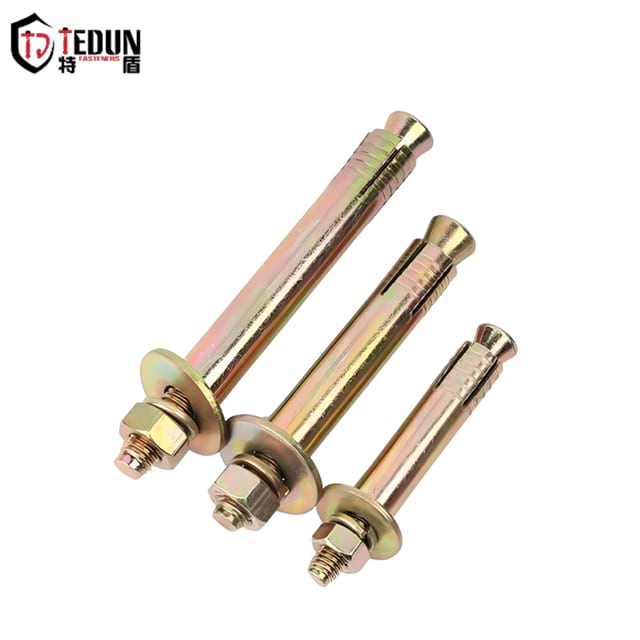
For post-installed requirements, heavy-duty mechanical expansion bolts are the primary workhorse. A professional Safety-Certified Elevator Anchor utilizes an engineered expansion sleeve to grip the drilled hole under designated tightening torque. They provide immediate load capacity without chemical cure wait times, making them the preferred choice for rapid rail bracket alignment in solid concrete.
Chemical injection systems bond threaded rods to concrete via pure epoxy or vinyl ester adhesives. Because they generate no radial expansion pressure against the concrete matrix, chemical anchors excel in narrow shaft corners, masonry retrofits, and thin concrete walls where mechanical wedges might cause edge breakout.
Fastener Category | Load Capacity | Installation Speed | Edge Distance Tolerance | Primary Application Field |
|---|---|---|---|---|
Cast-In Channel | Very High Dynamic | Slow pre-pour, fast post-pour | Pre-engineered edge limits | New high-rise commercial towers |
Mechanical Expansion Bolt | High Shear & Tension | Immediate full load | Moderate edge requirements | Standard guide rails and counterweights |
Chemical Resin Anchor | Extremely High Static | Requires resin curing time | Minimal edge distance needed | Shaft modernizations and tight corners |
Specifying anchoring hardware requires reviewing genuine technical data rather than relying on nominal bolt diameters. Guide rail bracket fasteners regularly face combined shear and pull-out forces. Under dynamic car travel, these loads reverse direction constantly.
Tedun Fasteners manufactures heavy-duty Elevator Anchor assemblies engineered from grade 8.8 and high-strength alloy carbon steels. Thread sizes ranging from M10 to M20 accommodate common bracket gauges, offering effective embedment depths between 70 mm and 160 mm. The thick expansion collar distributes radial force evenly to resist dynamic pull-out even when installed in tension-zone concrete with characteristic compressive strengths from C20/25 up to C50/60.
Environmental conditions in hoistways also demand corrosion protection. Shafts often suffer from unconditioned air and seasonal humidity spikes. Surface treatments such as mechanical zinc plating, hot-dip galvanizing exceeding 45 microns, or specialized zinc flake coatings ensure long-term protection against atmospheric oxidation and stress-corrosion cracking.
Site conditions dictate which fastener type will perform reliably without stalling installation teams. Use the following operational guidelines on the jobsite:
For reinforced concrete walls in new construction, heavy-duty mechanical anchors remain the most cost-effective and dependable choice. They allow crews to drill, insert, torque, and immediately plumb the guide rail brackets. Ensure you verify that the selected mechanical bolt holds cracked concrete certification.
For existing building modernizations where the concrete quality varies or brick infill exists, chemical injection systems provide the safest path forward. Chemical adhesives distribute stress along the entire borehole wall, eliminating the localized bursting stress associated with mechanical wedges. This prevents blowout cracking near door frames or structural joints.
When working within tight hoistways with minimal clearance between the bracket and wall edge, avoid standard wedge anchors. The expansion force can easily crack concrete borders. Use bonded studs or purpose-built undercut anchors instead.
Field data confirms that most anchor failures result from improper hole preparation rather than manufacturing defects. Dust left inside a drilled hole reduces the mechanical friction and chemical bond strength by up to fifty percent.
Installers must strictly enforce the standard cleaning sequence: drill to the specified depth, blow with compressed air, brush the hole using a steel wire brush, and blow out the remaining dust. Rotary hammer drilling can pack pulverised concrete powder into the micro-fissures of the hole wall, which must be scrubbed free before inserting the fastener.
Always use a calibrated torque wrench rather than an impact wrench during final tightening. An impact gun easily strips the concrete bore or stretches the bolt beyond its yield point without fully expanding the wedge sleeve. Setting the anchor to the manufacturer torque specification ensures the wedge seats correctly into the concrete matrix without crushing the base material.
Vertical transportation hardware falls under life-safety structural classifications. Lift contractors and structural reviewers must reject uncertified fasteners that lack transparent engineering assessments. Modern elevator codes require anchors to withstand continuous dynamic vibration without backing off or losing pre-load tension.
A compliant Safety-Certified Elevator Anchor carries clear traceability markings and documentation demonstrating performance under both cracked concrete and seismic shock conditions. Fasteners holding European Technical Assessment approvals or equivalent international certifications undergo extensive testing across millions of dynamic load cycles. This verified safety margin ensures the hoistway structure remains secure throughout the working life of the elevator system.
Selecting the right fastening system protects your project from costly rework, eliminates dangerous rail play, and keeps elevator installations compliant with international safety codes. Whether your project involves a modern high-speed shaft requiring seismic resilience or a historic shaft retrofit requiring stress-free chemical bonding, matching the fastener design to the structural substrate is critical.
Tedun Fasteners supplies heavy-duty, safety-certified hoistway anchoring solutions engineered specifically for the extreme dynamic loads found in modern elevator shafts. Review your shaft load requirements, specify certified anchoring hardware, and partner with qualified fastening specialists to guarantee long-term operational safety.
High-speed lifts generate intense, cyclic vibrations that can loosen standard friction anchors. Cast-in-place channels or heavy-duty undercut mechanical anchors rated for dynamic fatigue and cracked concrete are the best choices. In retrofits, high-strength chemical adhesive systems with threaded rods deliver exceptional vibration resistance.
Standard expansion bolts should never be used for guide rails unless they carry explicit certifications for dynamic loading and cracked concrete. The repeated lateral sway and emergency braking loads generated by elevators require specialized anchor bolts designed with ductile steel alloys and robust expansion sleeves.
Embedment depth depends on bolt diameter, bracket load, and concrete compressive strength. Standard heavy-duty guide rail anchors typically require effective embedment depths between 80 mm and 150 mm. Always follow the manufacturer technical data sheet to prevent concrete cone failure under peak shear loads.
Standard organic resins can lose bond strength when exposed to high temperatures. If the hoistway design requires specific fire-resistance ratings, you must specify resins rated and tested for elevated temperature conditions, or employ mechanical steel expansion systems that do not rely on temperature-sensitive polymers.
Anchoring assemblies should undergo visual and torque verification during scheduled annual lift maintenance. Technicians should inspect for bracket slippage, concrete cracking, rust, and check anchor nuts with a calibrated torque wrench to confirm retention of specified pre-load.
Vibration is the primary cause of bolt loosening in hoistways. Continuous car travel, motor vibration, and sudden stops create cyclic micro-movements. If the anchor was under-torqued during installation or installed in cracked concrete without an appropriate expansion sleeve, it will gradually lose clamping force.
Concrete compressive strength dictates the pull-out and shear breakout capacity of any post-installed fastener. Lower-strength concrete reduces the holding power of the anchor sleeve, requiring deeper embedment depths or larger bolt diameters to achieve the design safety margin specified by structural engineers.