


Views: 0 Author: Site Editor Publish Time: 2026-09-01 Origin: Site


Guessing the embedment depth of structural fasteners is a dangerous gamble. Improper embedment serves as a critical failure point for any project. You risk catastrophic structural collapse, severe legal liability, and immediate failed building inspections. Guessing the depth of a fastener jeopardizes the entire installation. Embedment depth is never an arbitrary measurement. You must calculate it based on multiple rigid factors. These include the hardware diameter, the physical load direction, concrete strength, and the specific fastener type. Shear loads and tension loads stress the foundation in completely different ways.
We will walk you through a proven evaluation framework. You will learn how to calculate minimum depth accurately for any project. We also show you how to navigate strict building codes effectively. Finally, we help you choose the correct hardware for residential or commercial applications. Proper preparation prevents costly rework later.
Standard Baseline: The absolute minimum embedment depth for most mechanical concrete anchor bolts is generally 4 to 5 times the diameter of the anchor.
Code Compliance: Residential foundations typically require adherence to IRC Section R403.1.6, dictating specific minimum depths (often 7 inches for standard sill plates).
Anchor Variations: A chemical anchor bolt will have entirely different embedment profiling than a wedge anchor bolt due to how load is distributed along the bonded surface.
Hole Depth vs. Embedment: Drill holes must typically be drilled ¼” to ½” deeper than the intended embedment depth to accommodate dust and debris.
How deep should you actually drill? Structural engineers rely on a standard rule of thumb. You multiply the diameter of the fastener by four or five. A standard 1/2-inch fastener usually requires 2 to 2-1/2 inches of depth. This baseline provides enough surface area for mechanical friction. It keeps the fixture secure under standard structural loads. You should always treat this multiplier as an absolute minimum baseline.
You must distinguish between two important engineering terms before calculating your final measurements.
Nominal Embedment: This represents the total length of the hardware sitting inside the drilled hole. It includes portions that do not grip the walls.
Effective Embedment: This is the actual depth transferring the physical load to the surrounding material. It dictates your true holding power.
You always calculate load capacities using effective embedment. Threaded tops protruding above the surface do not count toward this metric. If you measure incorrectly, your load calculations will fail entirely. The hardware will pull out under heavy stress.
You also face physical limits based on slab thickness. A strict safety margin applies to all concrete installations. You must always leave at least 1 to 1.5 inches of solid material below the bottom of the drilled hole. Drilling too deep risks structural blowout at the base. A blown-out bottom severely weakens the foundation. You lose the structural integrity of the entire connection.
Table: Rule of Thumb Minimum Embedment Depths
Fastener Diameter | Minimum Embedment (4x) | Recommended Hole Depth | Minimum Slab Thickness |
|---|---|---|---|
1/4 inch | 1.00 inch | 1.25 inches | 2.50 inches |
3/8 inch | 1.50 inches | 1.75 inches | 3.00 inches |
1/2 inch | 2.00 inches | 2.50 inches | 3.50 inches |
5/8 inch | 2.50 inches | 3.00 inches | 4.50 inches |
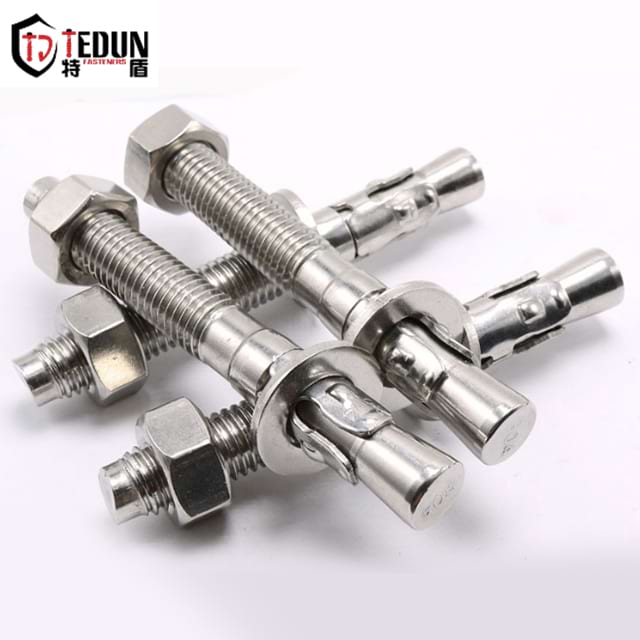
The specific technology you choose changes the depth rules entirely. A wedge anchor bolt relies strictly on mechanical friction. As you tighten the top nut, the bottom clip expands outward. It wedges tightly against the rigid walls of the hole. This mechanism requires precise depth mapping. If you under-embed it, the wedge fails to grip properly. The mechanism will slip backward under tension. If you over-embed it, the threads vanish below the surface. The hardware then becomes completely useless for mounting.
Conversely, a chemical anchor bolt operates differently. It bonds along the entire embedded length using two-part industrial epoxy. You can customize this depth heavily based on your load requirements. Installers often use epoxy for heavy machinery. They also use it when edge distance remains extremely limited. You must cite manufacturer ICC-ES evaluation reports for exact depths. These reports dictate the precise volume of epoxy required. They also provide mandatory curing times based on ambient temperature.
Other fastener types require unique depth considerations. A standard mechanical anchor bolt like a sleeve distributes expansion differently across the hole.
Sleeve Fasteners: A sleeve expands over a much larger surface area. You can sometimes use slightly shallower minimums for sleeves. They work exceptionally well in softer masonry or old brick.
Drop-in Fasteners: These require a specialized internal setting tool. They also demand exact hole depths. You must seat them perfectly flush with the surface. If you drill too deep, the setting tool cannot reach the internal plug to expand it.
Each mechanism demands a specific approach to hole preparation. You must clean every hole thoroughly before insertion. Use a stiff wire brush and compressed air. Dust left inside the hole destroys friction. It also ruins chemical adhesive bonds instantly.
Local building codes leave absolutely no room for guesswork. Residential builders must follow strict IRC standards during construction. Specifically, IRC Section R403.1.6 dictates sill plate connections for homes. You must use minimum 1/2-inch diameter fasteners. You must embed them at least 7 inches into the foundation. Installers must space them no more than 6 feet apart. They must also place one within 12 inches of every plate section end. These strict rules prevent house frames from shifting during high winds or minor tremors.
Commercial structures fall under different regulations entirely. Structural engineers reference Chapter 17 of ACI 318. This particular chapter governs post-installed hardware comprehensively. For commercial specifications, you calculate depth based directly on concrete breakout strength. Breakout strength measures how easily a cone of material might rip out under stress. Deeper embedment creates a significantly larger breakout cone. A larger cone means much higher ultimate tensile strength.
Load directions fundamentally alter these depth calculations. Upward pull is called tension. Tension requires deeper embedment to resist severe pull-out forces. Side-to-side force is called shear. Shear loads rely more heavily on the physical steel strength of the hardware. The metal must resist snapping sideways under lateral pressure. You must factor both tension and shear forces into your final depth. Often, active seismic zones require massive increases in embedment depth. You must consult local structural engineers for mandatory seismic modifications.
Every installation presents unique environmental challenges. Light outdoor structures pose a very common problem for homeowners and contractors alike. Pergolas, gazebos, and fences often attach to thin existing patio slabs. These poured slabs frequently measure only 3.5 to 4 inches thick.
You face a distinct challenge here. You need maximum embedment for wind resistance. However, you cannot blow out the bottom of the slab. The solution requires careful math and precision drilling. You might use a 2.5-inch embedment for a 1/2-inch fastener. This specific setup leaves exactly 1 inch of solid material below the hole. Alternatively, you might need to pour dedicated, deeper footings. Cutting out a square of the thin patio allows you to pour a proper 12-inch deep structural footing.
High-vibration environments demand an entirely different approach. Hot tubs, automotive car lifts, and industrial machinery create continuous dynamic fatigue. These aggressive micro-movements slowly back out standard mechanical fasteners over time. The solution involves deeper embedment specifications. Installers pair these deeper holes with high-strength epoxy adhesives. The chemical bond resists dynamic vibration far better than friction alone. The epoxy fills every microscopic void. This prevents the hardware from vibrating loose.
You must select the proper concrete anchor bolt for these varying conditions. Always match the alloy to the specific environment. Use stainless steel for outdoor pergolas exposed to rain. Use zinc-plated carbon steel for dry indoor machinery to maximize sheer strength.
Even perfect depth calculations fail if you ignore surrounding variables. Edge distance represents a massive risk factor during installation. You must keep hardware away from foundation edges. A common rule requires spacing them at least five times the diameter away from the drop-off. If you drill too close, the material splits outward. You might need deeper embedment or chemical alternatives to prevent lateral blowout. Epoxies exert zero expansion stress on the surrounding material, making them ideal near edges.
Compressive strength also dictates holding power. Low-strength materials behave quite differently under stress. A 2500 PSI slab requires significantly deeper embedment. It needs this extra depth to achieve the same grip as a harder 4000 PSI slab. Always verify the PSI rating before drilling. Older residential foundations often feature much lower PSI ratings than modern pours. You must adjust your embedment depth accordingly.
Striking rebar remains an inevitable reality on job sites. If your drill bit hits steel, you must stop immediately.
Evaluate: Determine the structural impact of the hit. Assess if cutting the rebar compromises the foundation.
Core Through: Sometimes, an engineer approves coring directly through the rebar using a specialized cutter bit.
Relocate: If not approved, you must relocate the hole to avoid the steel completely.
Patch: You then patch the abandoned hole properly with high-strength structural grout to restore integrity.
Never force a rotary hammer drill bit past rebar. You will ruin the expensive bit and enlarge the hole illegally. An oversized hole ruins mechanical friction instantly, leading to immediate failure.
Embedment depth dictates the safety of your entire structural project. It remains an exact calculation based on diameter, fastener type, and strict code requirements. You cannot guess these measurements without risking severe failure. Always map your depth carefully before you begin drilling into the foundation.
Remember to check the manufacturer’s technical data sheet for your specific hardware. Proprietary designs feature unique minimums and distinct installation protocols. Following these specific guidelines ensures you maximize load capacity safely. It also ensures you pass strict structural inspections on your very first attempt.
Take time to browse high-grade, code-compliant hardware for your specific application. Properly engineered fasteners provide essential peace of mind. Contact dedicated technical support for complex load-calculation assistance. Protect your structures by anchoring them perfectly every single time.
A: If the hole is too deep and the anchor is hammered down below the surface, the threads won't catch the nut. However, drilling deeper allows you to pound the anchor flush into the concrete later if the fixture needs to be removed.
A: Yes, if the length exceeds the thickness of your concrete slab minus 1 inch. Puncturing the bottom of the slab ruins the structural integrity of the hole.
A: Calculate the thickness of the fixture being attached, plus the thickness of the washer and the nut, and add 1/4 inch to ensure full thread engagement.
A: Yes. Hollow block or masonry requires specific anchors (like sleeve anchors or epoxy with screen tubes) and relies on the face shell thickness rather than raw depth.