

Views: 0 Author: Site Editor Publish Time: 2026-05-14 Origin: Site


Selecting the right structural profile requires balancing load-bearing capacity, material expenses, and environmental resilience. Engineers and procurement teams face this precise challenge daily in modern construction and manufacturing. Channel Steel offers significant material savings over standard solid beams. However, picking the wrong profile often leads to severe structural instability. A mismatched flange taper or an inadequate forming process frequently causes catastrophic torsional failure. It can also trigger dangerous distortional buckling under pressure.
This guide breaks down the essential technical specifications, performance advantages, and evaluation criteria you need. We explain how to source the correct materials for complex commercial, industrial, and architectural applications. You will learn the exact mechanics behind different profile geometries and manufacturing methods.
Our insights will help you avoid common procurement pitfalls and structural design errors. You will confidently navigate physical load realities, premium material alloys, and strict compliance frameworks. Read on to master the principles of structural channel selection.
Structural Efficiency: Channel steel provides a high strength-to-weight ratio for uniform loads but requires targeted support against torsional twisting due to its open-section, asymmetrical Y-Y axis.
Profile Selection: C-Channels (tapered flanges) excel in lightweight structural support, while U-Channels (parallel flanges) handle heavier loads and complex fabrication at a higher cost premium.
Process Matters: Hot-rolled channels offer cost-effective heavy framing, whereas cold-formed channels provide tighter dimensional tolerances necessary for precision applications.
Vendor Due Diligence: Partnering with an ISO-compliant Channel Steel manufacturer reduces risks related to material inconsistencies, yield strength variations, and delayed project timelines.
Channels function fundamentally as "open sections" in structural engineering. They substitute heavier I-beams perfectly when vertical bending forces exist but torsional forces remain minimal. You must map your procurement decisions directly to expected load types. Consider axial compression, flexure bending, and shear forces carefully. Always factor in required dimensional tolerances and long-term maintenance cycles.
Let us compare three common structural profiles. They each serve distinct engineering purposes and carry specific physical limitations.
Profile Type | Key Structural Characteristics | Torsional Resistance | Ideal Engineering Application |
|---|---|---|---|
Steel Channels | High utility, lightweight, highly weldable, cost-effective. | Low | Wall studs, roof purlins, secondary framing modules. |
Steel Tubes (HSS) | Closed geometric sections, symmetric load distribution. | Very High | Seismic zones, high-torque machinery environments. |
I-Beams | Maximum vertical load capacity, heavy web thickness. | Medium | Primary load-bearing floors, bridge infrastructure. |
Steel channels offer unparalleled lightweight versatility. They weld easily and fit seamlessly into tight architectural spaces. However, their open-section design makes them vulnerable to twisting forces along the asymmetrical axis. Steel tubes feature closed geometries. They handle twisting and seismic loads exceptionally well but carry higher manufacturing costs. I-beams provide maximum vertical load capacity. They carry the heaviest structural burdens but lack the lightweight adaptability of channels. Procurement success relies on identifying the exact force dynamics of your project beforehand.
Manufacturing processes dictate the physical capabilities of your structural members. You must choose between hot-rolled and cold-formed manufacturing based on your specific project demands.
Hot-rolled channels crystallize above extremely high temperatures. Manufacturers push steel through industrial rollers while it remains glowing hot. This process suits heavy structural applications perfectly. Larger cross-sections benefit immensely from this affordable method. You might notice residual stress and minor surface imperfections upon cooling. These aesthetic flaws rarely impact heavy-duty structural performance.
Cold-rolled processes occur entirely at room temperature. The metal passes continuously through automated roll-forming machines. This method yields a superior surface finish. You gain tighter dimensional tolerances, often ranging strictly between 0.003 and 0.150 inches in thickness. The cold-working process also induces work-hardening, which enhances overall tensile strength. Use cold-formed profiles for exposed architectural elements and precision equipment framing.
You must also understand core profile geometries. Different shapes solve completely different engineering problems.
C-Channel (UPN/Standard): These feature internally tapered flanges. They offer high material efficiency for the cost. Engineers use them primarily for secondary structural elements. Roof purlins and commercial wall studs rely heavily on C-channels.
U-Channel (UPE): These feature parallel, often thicker flanges. They provide superior load-bearing capacity. You will experience easier bolting alignment during assembly. They generally carry a higher manufacturing cost premium.
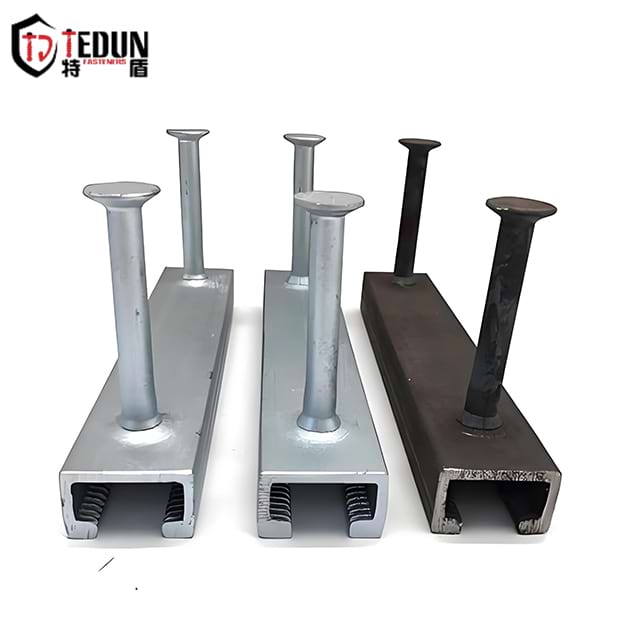
Strut/Unistrut Profiles: Manufacturers pre-slot these channels for modular assembly. They enable rapid, weld-free construction for heavy HVAC systems and overhead cable trays.
Hat/Furring Channels: These provide essential acoustic dampening. Builders use them extensively for non-structural architectural framing and drywall separation tasks.
Z-Channels: These act as high-capacity purlins. They overlap seamlessly in metal roofing systems to distribute snow and wind loads evenly.
Your operating environment dictates your material selection directly. Choosing the wrong alloy leads to rapid degradation and severe safety hazards. We use a specific matrix to evaluate environmental resilience across various industries.
Material Grade | Cost Efficiency | Corrosion Resistance | Primary Use Case |
|---|---|---|---|
Carbon Steel (Q235, SAE 1010) | Excellent | Poor (Requires coating) | Dry indoor structural framing and machinery. |
Hot-Dip Galvanized (GI) | Good | Excellent | Outdoor infrastructure and humid environments. |
Stainless Steel (304, 316L) | Premium | Maximum | Marine applications and food processing lines. |
Aluminum Alloys (6061) | Moderate | Very Good | Aerospace, rail transport, and automotive. |
Carbon steel serves as the baseline standard globally. Grades like Q235 and SAE 1010 deliver exceptional cost-efficiency. They offer high tensile strength for general construction. However, they remain highly susceptible to rapid oxidation without applied surface treatments.
Hot-dip galvanized (GI) channels solve the oxidation problem permanently. Manufacturers submerge carbon steel in vats of molten zinc. This creates a thick metallurgical bond preventing rust propagation. You need galvanized profiles for outdoor infrastructure, chemical plant walkways, and bridge framing.
Stainless steel commands a premium cost tier. Alloys like 304 and marine-grade 316L provide complete chemical resistance. They also resist creep deformation in high-temperature applications. You must specify stainless alloys for highly corrosive marine environments and sterile food processing facilities.
Aluminum alloys maximize overall weight reduction. Grade 6061 provides excellent strength-to-weight ratios. You essentially trade off raw load capacity for extreme lightness. The transportation and aerospace sectors heavily utilize aluminum frameworks to improve fuel efficiency.
Always ensure your selected materials align with strict compliance baselines. Your profiles must meet localized testing guidelines. Verify adherence to structural standards like ASTM A36 for carbon steel or specific AISI guidelines before finalizing orders.
You can optimize modern structural designs by matching specific channel types to their ideal applications. The construction and manufacturing sectors rely heavily on these profiles to solve complex weight distribution challenges.
Primary structural framing frequently utilizes heavy-duty steel channels. Builders actively replace traditional wood joists in commercial framing with steel. This completely eliminates warping, mold rot, and variable material density issues. You can even place channel configurations back-to-back. Bolting them together creates a virtual I-beam capable of handling significant vertical loads.
Secondary support systems depend entirely on uniform load transfer. Channels move weight safely to the primary structural members. Floor joists, roof cross-bracing, and window headers represent classic secondary applications. The open-section design allows easy integration into existing structural grids.
Industrial equipment and heavy vehicle chassis require distinct physical properties. Designers leverage the high ductility of steel channels here. The material absorbs sudden kinetic energy smoothly. This prevents catastrophic, sudden fracture in dump truck beds, trailer chassis, and heavy machinery frames.
Consider this summary of key performance advantages:
Predictable Material Uniformity: Steel behaves consistently under varying stress levels, allowing for precise engineering calculations and safer load assumptions.
Non-Combustible Baseline: The core material will never fuel a building fire. However, high-temperature environments still require proper fireproofing insulation to prevent structural weakening.
Superior Strength-to-Weight Ratio: Channels outperform solid rectangular bar stock easily. You get vital structural rigidity while stripping away unnecessary dead weight.
Even perfect materials fail when engineers implement them incorrectly. You must understand common physical failure modes to design effective mitigation strategies.
Torsional instability remains a primary engineering concern. The Y-Y axis of a standard channel is inherently asymmetrical. Unbraced flanges will twist aggressively under heavy off-center loads. You mitigate this by installing proper lateral bracing at regular intervals. If bracing proves impossible structurally, consider switching to closed tubular steel.
Distortional buckling threatens thin-walled profiles specifically. Cold-formed channels under heavy compression often experience this failure mode. The web and flanges distort out of shape simultaneously, leading to collapse. You must run accurate strength prediction modeling prior to installation. Never exceed AISI compression load guidelines for thin-walled sections.
Thermal creep compromises structural integrity rapidly during fires. Structural steel loses significant yield strength at elevated temperatures. The load capacity drops off sharply once internal temperatures pass 400°C (752°F). You must apply fire-rated cladding or intumescent paint for all load-bearing building applications.
Corrosion management requires proactive job site planning. Uncoated channels degrade quickly when stored improperly. You must enforce covered storage protocols on construction sites. Design proper drainage systems to prevent rainwater from pooling inside the "C" cavity. Schedule routine coating inspections to catch rust propagation early.
Common Mistake: Failing to seal field-cut ends on galvanized channels exposes the raw steel core, leading to rapid localized rusting.
Best Practice: Apply a high-quality zinc-rich cold galvanizing compound to any field cuts, welds, or drilled holes immediately after fabrication.
Your long-term structural integrity depends heavily on your supply chain. Partnering with an experienced Channel Steel manufacturer eliminates critical project bottlenecks. You must evaluate potential fabrication vendors rigorously.
Start by assessing their core production capabilities. Do they offer in-house CNC roll forming? Can they perform precision laser fusion for custom dimensions? Many suppliers limit themselves strictly to standard catalog sizes. Complex architectural projects require partners capable of delivering customized, non-standard geometry.
Quality assurance separates reliable vendors from risky ones. Trustworthy manufacturers provide transparent Material Test Reports (MTRs) for every single batch. These vital documents validate yield strength, chemical composition limits, and exact dimensional tolerances. You should never accept metal shipments lacking proper metallurgical documentation.
Evaluate scalability and lead times carefully. Assess the supplier's actual ability to run continuous, high-volume orders. Precision cold-rolled profiles wear down cheap tooling quickly. Ensure your partner maintains their equipment strictly to prevent dimensional drift over long production runs.
Finally, look for valuable secondary services. Can they pre-punch slotted channels accurately? Do they handle hot-dip galvanizing internally? Robust logistics support and in-house finishing reduce multi-vendor friction and streamline project budgets. A full-service manufacturing partner accelerates your project timelines effectively while maintaining strict quality control.
Selecting structural channels requires precision in matching physical load requirements to geometric realities. You must balance complex flexure forces against inherent torsional vulnerabilities. Standard C-channels optimize costs flawlessly for secondary framing and lightweight support. Meanwhile, heavier U-channels and specific premium alloys resolve demanding industrial challenges. They also combat corrosive environmental threats effectively when specified correctly. Remember to match your chosen forming process directly to your project's dimensional tolerance requirements.
Urge your procurement and engineering teams to audit their current structural designs today. Look for significant material weight savings by swapping outdated solid beams for high-strength channels. Consult with a certified manufacturing partner for custom roll-forming quotes tailored to your exact specifications. Always request material test samples before finalizing any large-scale infrastructure orders to guarantee performance.
A: U-channels generally command a higher price premium than C-channels. This difference stems directly from manufacturing complexity. U-channels feature parallel, thicker flanges requiring more raw material and higher rolling forces to produce. However, this extra cost proves structurally justified when your project demands heavier load-bearing capacities and simplified bolting alignment.
A: Yes, but with strict engineering limitations. Channels handle specific uniform loads exceptionally well. However, they remain generally inferior to standard I-beams for supporting heavy axial loads. Because of their asymmetrical open-section design, they lack strong torsional resistance. You must provide proper flange support and lateral bracing if using them primarily.
A: Hot-dip galvanizing offers highly cost-effective, localized sacrificial rust protection. The outer zinc coating takes the corrosive damage instead of the inner steel. Stainless steel costs significantly more but provides comprehensive, lifetime chemical resistance. Stainless alloys resist deep corrosion and high-temperature creep naturally, making them superior for extreme marine environments.
A: Distortional buckling occurs under high compression loads in thin-walled profiles. The overall cross-section distorts, causing the web and flanges to buckle simultaneously. This specific compression failure happens when maximum structural limits are exceeded. You must strictly adhere to AISI and ASTM load guidelines and use predictive modeling to prevent this failure.