

Views: 0 Author: Site Editor Publish Time: 2026-05-05 Origin: Site


Selecting an anchoring system is rarely as simple as matching a basic load requirement. The real challenge emerges when you move from perfect laboratory conditions to harsh jobsite realities. Moisture, extreme temperatures, and dust are where structural anchor failures typically occur. You need to plan for these variables.
Whether you secure critical infrastructure, handle post-installed rebar, or execute a rapid same-day bolt-up, the details matter immensely. The chosen chemistry, environmental tolerance, and specific regulatory approvals strictly dictate the ultimate success of your connection. If you ignore ambient conditions, you risk catastrophic joint failure.
This comprehensive guide breaks down the core engineering variables and vital compliance standards you need to know. We will help you evaluate formulations and specify the exact anchoring system your next project demands. Read on to master the specification process from chemistry selection to final code compliance.
Chemistry Dictates Performance: Epoxy resins excel in heavy-duty and submerged conditions, while acrylic hybrids offer rapid curing and extreme temperature versatility.
Site Conditions Trump Lab Data: Concrete moisture levels and ambient temperatures drastically alter working times, requiring precise formulation matching and load-reduction calculations if conditions aren't perfectly dry.
Compliance is the Baseline: ICC-ES evaluation reports, Seismic (A-F) approvals, and OSHA silica dust compliance dictate the legal and structural viability of the chosen system.
Holistic System Evaluation: A reliable anchoring adhesive manufacturer supplies not just the resin, but the design software, dispensing tools, and approved cleaning accessories necessary for flawless installation.
Specifiers often default to familiar products out of habit. They risk major project delays or catastrophic system failures. If the chemical formulation misaligns with the ambient environment or load profile, connections break down. You must match the resin perfectly to your specific job constraints to ensure long-term structural integrity.
Pure epoxies remain the best choice for high-tension tasks. Think structural steel connections and deep post-installed rebar doweling. Epoxy formulations maintain superior bond strength even in elevated temperatures. They perform incredibly reliably inside submerged or completely water-filled holes. The resin displaces water effectively to grab the concrete pores.
Trade-off: You face significantly slower cure times. This reality can delay sequential construction steps. Installers must wait longer before applying torque or loading the actual anchor.
Manufacturers formulate acrylics explicitly for extreme cold-weather installations. They shine in scenarios demanding rapid load-bearing capacity. Industry professionals often call this a "same-day bolt-up." They give you broad installation temperature ranges. They achieve this flexibility without sacrificing standard tensile strength.
Trade-off: They often exhibit lower maximum temperature thresholds. You might also see slightly lower ultimate bond strengths compared to pure epoxies in heavy civil applications. They set up fast, so installers must work quickly.
Common Mistakes: Do not use fast-curing acrylics in 100°F weather. The resin will harden inside the mixing nozzle before you even inject it into the hole.
Adhesive Type | Best Application | Cure Speed | Water Tolerance |
|---|---|---|---|
Pure Epoxy | Heavy civil, rebar doweling, deep holes | Slow (12-24 hours) | Excellent (Submerged approved) |
Acrylic Hybrid | Same-day bolt-up, cold weather, railings | Fast (30-60 minutes) | Moderate (Damp holes only) |
The most frequent cause of adhesive anchor failure is a stark mismatch. Engineers make pristine assumptions in the office. However, contractors face chaotic installation realities on the ground. We must bridge this dangerous gap to prevent structural failures.
You must define "dry concrete" strictly. Standards typically require 14 full days without any moisture exposure. Water acts as a barrier. It prevents the resin from wetting the microscopic concrete pores.
If site conditions cannot guarantee strict dryness, specifiers must evaluate products explicitly rated for "water-saturated" conditions. You then apply the correct load-reduction phi-factors to ensure structural safety. Using a premium Anchoring Adhesive rated for wet conditions provides critical peace of mind when weather turns unpredictable.
Assess how ambient and base material temperatures affect "gel time" (working time) and "cure time." Extreme heat dramatically accelerates gel time. It severely limits the installer's functional window. A 30-minute working time at 70°F might shrink to just 5 minutes at 100°F.
Specifiers should mandate slow-cure formulations for hot climates. This simple adjustment will successfully mitigate widespread installation errors. It prevents contractors from inserting threaded rods into partially hardened glue.
Traditional brush-and-blow cleaning methods rely heavily on operator diligence. Unfortunately, leftover silica dust actively compromises the crucial micro-level mechanical interlock. Dust acts as a bond breaker between the resin and the concrete wall.
Evaluate systems utilizing modern hollow drill bits paired with integrated vacuum extraction. This approach seamlessly meets OSHA 1926.1153 silica dust regulations. It heavily reduces dangerous reliance on manual cleaning.
Best Practices for Hole Preparation:
Always use the exact brush diameter specified by the manufacturer.
Blow out the hole from the very bottom up using compressed air.
Verify the hole is completely free of standing water unless using a submerged-approved epoxy.
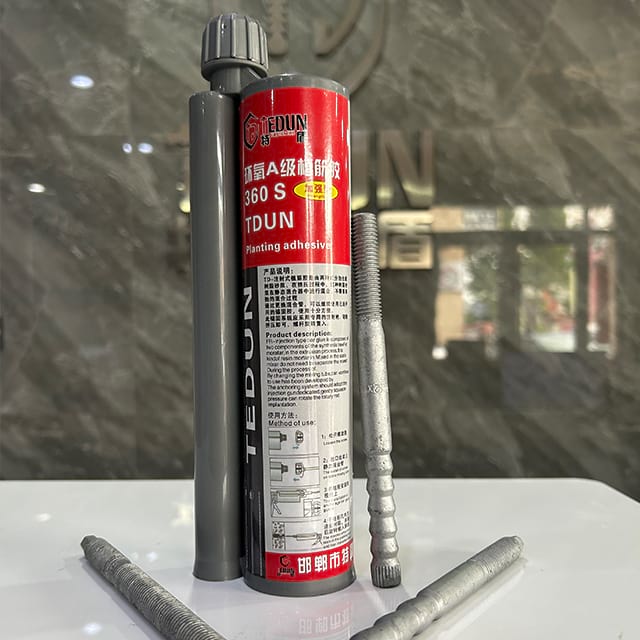
Unverified claims of "high strength" are simply insufficient for commercial and infrastructure projects. Decision-makers must constantly demand empirical, third-party validation. Lives depend on these structural connections holding true during extreme events.
Look closely for explicit approvals covering both cracked and uncracked concrete. Base materials shift and settle over time. Concrete naturally cracks in the tension zone. Your chosen system must explicitly state its performance metrics for cracked concrete environments. If the ESR report omits cracked concrete data, do not use it for structural applications.
Ensure the chosen adhesive system is thoroughly tested and approved for Seismic Design Categories A through F. This is strictly required if the project sits inside a known fault zone. Seismic events apply rapid, dynamic loads. The resin must absorb these immense shockwaves without shattering or pulling out.
Always screen for niche compliance requirements early in the initial evaluation process. Waiting until the inspection phase will cause massive rework.
NSF/ANSI 61: Mandatory for any components used directly inside potable (drinking) water systems. It ensures no toxic chemicals leach into the water supply.
DOT Approvals: Strictly required for state-level highway, active bridge, and vital infrastructure retrofits. Each state Department of Transportation maintains an approved product list.
Fire Resistance Ratings: Necessary for applications where anchors hold up fire-rated assemblies or tunnel ventilation systems.
Choosing the perfect chemical represents only half the equation. Partnering with the right vendor ensures a smooth rollout, high design accuracy, and solid supply chain reliability. Finding a highly reputable Anchoring Adhesive manufacturer protects your project timeline.
You need a vendor who can scale production to meet massive infrastructure demands. They must also provide robust on-site technical support. If an installer encounters a strange base material, the vendor's engineering team should be a phone call away. Real-world troubleshooting separates premium brands from budget suppliers.
Does the manufacturer actually provide proprietary design software? It needs to integrate seamlessly with current ACI 318 or CSA structural codes. You rely on this tool to correctly calculate complex edge distances and overlapping boundary conditions. Manual calculations for anchor spacing take hours. Good software automates this and generates submittal-ready reports instantly.
Never mix and match different brands. Evaluate potential manufacturers strictly based on their end-to-end ecosystem. This ecosystem includes precisely matched mixing nozzles, reliable coaxial or side-by-side dispensers, and specialized screen tubes designed for hollow masonry applications. Using brand A's resin in brand B's gun often alters the mixing ratio, destroying the holding power.
Trust manufacturers who segment their offerings clearly. Look for clear tiers like heavy-duty structural, standard concrete, and basic masonry. Avoid brands pushing a dangerous one-size-fits-all solution. A chemical designed for light indoor handrails should never be used to anchor a highway sound barrier.
Use this sequential checklist to filter numerous options and select the optimal adhesive. It removes guesswork from the engineering equation.
Assess the Base Material: Is it solid concrete, hollow block, or masonry? Hollow bases require specific screen tubes to safely create a dual mechanical and chemical interlock. You must also determine if the concrete is cracked or uncracked.
Determine the Load Profile: Accurately calculate the necessary shear, tensile, and pullout strengths. Always factor in any potential dynamic or harsh seismic loads. You must also account for the steel insert's yield strength.
Audit the Environment: Map out expected jobsite installation temperatures and moisture levels. Verify whether the installation occurs overhead or horizontally. Overhead installations require special retaining caps to stop resin from dripping out before it cures.
Select the Chemistry & Curing Speed: Choose a robust epoxy formulation for heavy, wet, or slow-paced jobs. Select an advanced acrylic hybrid for fast-track or highly demanding cold-weather jobs. Match the gel time to the crew's actual speed.
Selecting a robust adhesive connection requires moving far beyond basic load charts. You must account for dynamic site specificities, strict climate constraints, and real installer behavior. Laboratory testing assumes perfection, but jobsites are inherently imperfect.
Prioritize fully certified, comprehensively system-tested solutions. Seek products offering advanced design software support to ensure long-term structural safety and seamless regulatory compliance. Partner with vendors who provide complete tool ecosystems rather than just standalone cartridges.
Always consult directly with a technical specialist. Utilize certified anchor design software to run exact boundary condition calculations before ever finalizing your specification. Taking these steps guarantees a secure, lasting connection.
A: Yes, but only specific formulations (typically pure epoxies) are rated for water-saturated or submerged conditions. Load capacities must be recalculated using appropriate reduction factors.
A: Yes. When working with hollow base materials, a screen tube or umbrella insert must be used to contain the resin, allowing it to extrude through the mesh and form a permanent mechanical and chemical interlock.
A: Adhesive anchors provide a permanent, high-strength bond. For temporary installations, mechanical drop-in (female) anchors are generally preferred as the external bolt can be removed while leaving the internal anchor flush with the concrete.