


Views: 0 Author: Site Editor Publish Time: 2026-05-29 Origin: Site


Selecting the wrong concrete fastener is not just an inefficiency. It is a massive liability. Improper selection often leads to catastrophic structural failure, severe code violations, and wasted labor hours. When critical infrastructure hangs in the balance, you need more than marketing claims. We must move beyond universal "do-it-all" promises. This article provides an evidence-based comparison of concrete fasteners. We ground our analysis in realistic load capacities, substrate dependencies, and actual field installation realities.
You will learn how to properly assess tension and shear forces. We also reveal why precise installation techniques dictate actual hardware performance. We maintain an objective, compliance-aware approach throughout this guide. Ultimately, we offer a clear framework to help you specify the exact fastener required for your specific structural environment.
The Versatility Trade-Off: Anchors designed to work in multiple substrates (e.g., hollow block and concrete) generally offer lower ultimate holding power than substrate-specific anchors.
The 25% Safety Margin: Industry standard dictates that a concrete anchor bolt's safe working load should never exceed 25% of its tested ultimate load capacity.
Substrate is King: A fastener is only as strong as the concrete it is embedded in (e.g., 2,000 vs. 4,000 PSI).
Installation Dictates Performance: Uncleaned drill holes and ignored edge-distance requirements can reduce a heavy-duty anchor's capacity to near zero.
Every engineering decision starts with proper load assessment. You cannot evaluate a fastener without defining its physical environment. Understanding how forces interact with your hardware is the first step toward safe specification.
You must clearly define the environmental conditions. Static loads consist of continuous dead weight. These predictable environments allow for standard mechanical anchors. Conversely, dynamic and impact loads involve sudden force changes. Vibrations from moving machinery or sudden impacts require robust heavy-duty or adhesive solutions. A basic expansion fastener will likely vibrate loose under heavy dynamic stress.
We must break down the physical forces acting on the connection. Tension forces pull straight out from the drilled hole. Suspending a pipe from a ceiling creates pure tension. Shear forces push downward, acting perpendicular to the fastener shaft. Mounting a heavy steel bracket against a vertical wall generates immense shear stress. Fasteners often carry different capacity ratings for tension and shear. You must evaluate both numbers.
Buyers must read specification sheets carefully. Manufacturers often advertise the "Ultimate Load" in large print. This number represents the point of catastrophic failure during laboratory testing. However, strict industry compliance requires calculating the "Safe Working Load." Standard practice dictates the safe working load is typically 25% of the ultimate limit. Never design a structural connection based on ultimate failure numbers.
Holding values fluctuate significantly based on concrete hardness. We measure this hardness in PSI (pounds per square inch). A fastener rated for modern 4,000 PSI concrete will drastically underperform in aging 2,000 PSI slabs. Your selected hardware is only as strong as the base material gripping it. Crumbly or degraded concrete requires specialized fastening approaches to prevent blowout.
Installation timing changes everything about your hardware choice. We broadly categorize fasteners by when they enter the concrete matrix.
Construction teams embed these fasteners into the formwork before pouring the concrete. Common types include heavy L-Bolts and J-Bolts. We typically use them for structural foundations, light poles, and heavy machinery mounts. The bent hook at the bottom locks directly into the curing concrete.
This method offers the absolute highest load capacity available. It creates a permanent, unyielding structural fixing. However, cast-in-place installations offer zero flexibility. If a template shifts during the pour, the exposed threads will misalign. Fixing a misaligned pre-pour Concrete Anchor Bolt requires expensive core drilling and chemical retrofitting.
Contractors install these fasteners into fully cured concrete via drilling. This approach provides immense flexibility for renovations, additions, and layout adjustments. We categorize post-installed solutions into three main approaches: mechanical expansion, thread-cutting, and adhesive systems. Each system utilizes a completely different physical mechanism to secure the load.
Selecting the right post-installed fastener requires comparing mechanisms directly. We have structured a pros and cons framework to aid your shortlisting process.
Wedge anchors feature a male thread profile. They offer extreme pullout and shear strength. As you tighten the top nut, a mechanical clip at the base expands aggressively against the solid concrete walls.
Strengths: Highest mechanical capacity. Excellent for permanent structural connections.
Limitations: You cannot use them in brick, mortar, or hollow block. They require significant edge distance. Placing them too close to a slab edge causes the concrete to crack and blow out.
Drop-in anchors utilize a female thread profile. You set a hollow metal sleeve flush beneath the concrete surface using a specialized setting tool. This allows you to insert and remove external threaded rods or standard bolts as needed.
Best For: Overhead ceiling installations, HVAC ductwork routing, and stadium seating.
Advantage: Ideal for applications requiring temporary or removable bolt connections. The anchor body remains safely hidden flush with the floor when unthreaded.
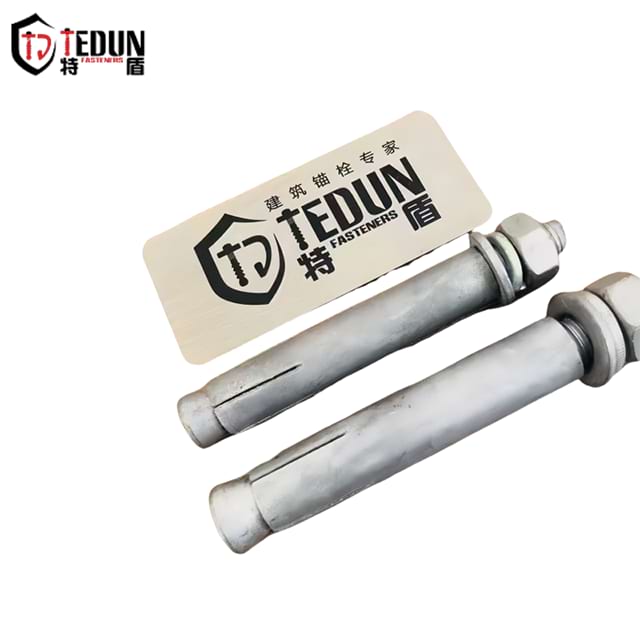
Sleeve anchors offer a highly versatile profile. The entire external sleeve expands along its length as you tighten the bolt head.
The Trade-Off: They are excellent for inconsistent materials like old brick, mortar, and aging concrete. However, this versatility yields lower ultimate strength compared to dedicated wedge anchors.
These fasteners, like heavy-duty Tapcons, cut their own internal threads directly into the concrete surface. They do not rely on wedge expansion.
Advantage: They generate virtually zero mechanical expansion stress. This means you can place them much closer to the edge of a concrete slab safely. They are also fully removable and highly resistant to vibration.
Anchor Type | Thread Type | Expansion Stress | Best Base Material | Removability |
|---|---|---|---|---|
Wedge Anchor | Male | High | Solid Concrete Only | Permanent |
Drop-In Anchor | Female | High | Solid Concrete Only | Bolt is Removable |
Sleeve Anchor | Male / Hex Head | Medium | Brick, Block, Concrete | Permanent |
Concrete Screw | Hex Head | Zero | Solid Concrete, Block | Fully Removable |
Sometimes mechanical expansion poses too high a risk for fragile substrates. Adhesive systems offer a radically different approach to fastening.
Chemical anchors use heavy-duty, two-part epoxy resins. The installer injects this compound into a pre-drilled hole. Next, they insert a threaded rod. The resin flows into the microscopic pores of the concrete. Once fully cured, the rod, epoxy, and concrete form a single, unified solid mass.
Adhesive systems dominate specific high-stress niches in commercial construction. We must evaluate their unique performance profile carefully.
Pros: Chemical bonding generates absolutely zero outward expansion stress. This makes it ideal for repairing cracked concrete, fastening into hollow blocks, and executing near-edge installations. Furthermore, epoxy systems provide unmatched resistance to severe dynamic loads and continuous vibration.
Cons and Risks: The material cost remains significantly higher than mechanical equivalents. Installers face strict ambient temperature requirements during the curing phase. Most importantly, adhesive systems have zero tolerance for improper hole cleaning. Dust left inside the hole completely ruins the chemical bond.
Engineering specifications mean nothing if field execution fails. Poor installation habits routinely compromise structural integrity.
We must dispel the dangerous "1+1=2" myth. Placing two fasteners closely together does not double your holding capacity. Concrete experiences stress in a cone shape extending outward from the embedded hardware. If multiple anchors sit too close together, their stress cones intersect. You must mathematically reduce their individual holding capacities according to IBC (International Building Code) standards. This calculation is called the Load Reduction Factor. The same reduction applies when installing too close to a slab edge.
Concrete dust poses extreme safety and performance risks. Drilling generates silica dust, which is hazardous to human lungs. Drilling strictly requires OSHA Table 1 compliant dust extraction equipment.
Beyond human safety, silica dust destroys hardware performance. Failing to clean a drilled hole acts exactly like a dry lubricant. It coats the concrete walls, preventing expansion clips or adhesives from gripping the solid substrate. You must vacuum the hole with a HEPA system, scrub the walls using a wire brush, and vacuum again. Skipping this step guarantees anchor failure.
Practical field realities dictate final strength. Installers frequently damage hardware by striking exposed threads with heavy steel hammers. Always thread the nut completely flush to the top of a wedge stud before hammering. This simple field practice protects the delicate threads. It ensures you can apply the correct torque specifications later without galling the metal.
Sifting through countless catalogs feels overwhelming. We have distilled the selection process into three actionable steps. Following this logic ensures you specify an Anchor Bolt properly suited for your environment.
Step 1: Assess the Base Material. Identify the exact substrate. If you have solid, uncracked concrete, choose heavy-duty wedge or drop-in anchors. If you face hollow block, crumbling brick, or cracked concrete, shift immediately to sleeve anchors or adhesive epoxy systems.
Step 2: Determine Removability Needs. Define the lifecycle of the attached fixture. For permanent structural columns, use wedge studs or chemical adhesives. If you anticipate future layout changes or need to remove equipment for maintenance, select drop-in sleeves or heavy-duty thread-cutting screws.
Step 3: Factor the Environment (Corrosion). Assess moisture and chemical exposure rigorously. For dry interior environments, standard zinc-plated carbon steel suffices. For exterior applications facing occasional moisture, mandate hot-dipped galvanized steel. For submerged installations, highly corrosive industrial plants, or chemical processing facilities, you must specify Type 304 or Type 316 Stainless Steel.
There is no single "best" concrete fastener on the market. The correct choice always represents a calculated intersection of load type, base material PSI, and strict edge distance limitations. Relying on universal hardware for specialized tasks invites structural failure.
Evaluate your static and dynamic loads carefully. Enforce strict hole-cleaning protocols on the job site to guarantee safe holding values. Before finalizing your hardware schedule, consult official engineering spec sheets (such as ICC-ES evaluation reports) for your specific PSI environment. If your application involves complex dynamic stress, contact technical sales engineers to request custom load calculations based directly on your project blueprints.
A: Male anchors, like wedge anchors, feature an exposed threaded stud protruding from the concrete. You secure the fixture by fastening a nut over this exposed stud. Female anchors, like drop-in variants, sit completely flush beneath the concrete surface. They feature internal female threads designed to accept a separate, removable external bolt or threaded rod.
A: It depends heavily on the specific anchor type. Mechanical expansion anchors require a wide safety margin, often three to five times the anchor diameter, to prevent the concrete from cracking. Adhesive systems and thread-cutting concrete screws can be placed much closer to the edge because they do not exert outward mechanical expansion stress.
A: Fasteners usually pull out due to severe installation errors. The most common reasons include failing to clear concrete dust from the drilled hole, utilizing a worn masonry bit that drills an oversized hole, or installing a high-stress expansion anchor in a crumbling, low-PSI substrate.