


Views: 0 Author: Site Editor Publish Time: 2026-05-19 Origin: Site


Structural anchoring is a zero-tolerance application where connections must never fail. Failure means compromised load transfer. It leads to failed inspections or catastrophic structural collapse. Successfully implementing these systems requires high precision. We must move beyond baseline bond strength to ensure structural integrity. You need to evaluate environmental compatibility and strict regulatory compliance. Field crews must also follow rigid installation protocols flawlessly. Mistakes during this process compromise both worker safety and project timelines.
This comprehensive guide provides a solid decision-stage framework. Specifiers, contractors, and procurement teams will benefit directly from these insights. You will discover how to select the right Anchoring Adhesive for your specific job site. You will also learn a rigorous operational standard for field application. We break down material chemistry, procurement standards, and exact preparation steps. Following these guidelines ensures your structural connections perform exactly as engineered.
Material Selection: Epoxy provides superior heavy-duty and seismic load capacities, while hybrid acrylics allow for cold-weather application and same-day bolt-up.
Compliance is Mandatory: Material selection must align with ACI (American Concrete Institute) standards and possess valid safety and design-life appraisals.
The MPII Rule: Installation must strictly follow the specific Manufacturer's Printed Installation Instruction (MPII), as parameters like injection volume and cure times vary by formula.
Site Prep Dictates Success: The majority of anchor failures stem from improper hole preparation; a strict "brush-and-blow" cycle is non-negotiable.
Not all formulations operate equally across different temperature ranges. They behave differently across various substrates and load requirements. Matching the chemistry to the site conditions remains your first critical decision. You must understand the core chemical properties before specifying a product.
Pure epoxy systems deliver ultimate bonding strength. They provide exceptional chemical resistance. Engineers specify them heavily for high-seismic zones. They also excel under heavy structural column base plates. These formulations form strong, dense polymer networks upon curing.
You can use them in oversized or diamond-cored holes. They handle dry, damp, or completely water-filled environments effectively. Some specialized versions even cure securely underwater. However, they carry specific trade-offs. Epoxy requires longer curing times. Extended set times can delay sequential construction steps. Cold weather slows the exothermic reaction significantly.
Hybrid acrylic and vinyl ester systems offer agility. They feature rapid curing formulations designed for high-turnover projects. Contractors prefer them in low-temperature environments. Standard epoxies become too viscous or fail to catalyze in the cold. Acrylics overcome this limitation easily.
These systems shine in scenarios requiring "same-day bolt-up." They maximize operational efficiency on tight schedules. The trade-offs involve lower ultimate load thresholds compared to pure epoxies. They also have much faster working times. This rapid setting leaves less margin for error during complex or deep installations.
Chart: Quick Comparison of Anchoring Chemistries | ||
Feature | Pure Epoxy Resins | Hybrid Acrylic Systems |
|---|---|---|
Load Capacity | Highest (Heavy-duty, Seismic) | Moderate to High |
Temperature Range | Warm to moderate (sluggish in cold) | Excellent in cold weather |
Cure Time | Slow (12-24+ hours) | Fast (often under 1 hour) |
Water Tolerance | High (some rated for underwater) | Low to Moderate |
Procurement teams play a vital role in project safety. Selecting a reliable Anchoring Adhesive manufacturer provides more than just the chemical product. They must supply robust technical documentation. You also need reliable supply chains and transparent testing data. Evaluating these partners correctly prevents job site delays.
You must understand the distinct phases of chemical curing. Working time dictates your operational window. It represents the minutes you have for injection and rod placement before the liquid thickens. Heat accelerates this phase drastically. Cold weather extends it.
Cure time represents the strict holding period. The anchor cannot bear any structural loads until this phase finishes. Procurement teams must align these times carefully. Match them against the daily operational pace and ambient temperature. A mismatch causes either stalled production or premature failures.
Commercial jobs require verified compliance. Shortlist only products backed by documented safety appraisals. Look for extensive testing data. ACI (American Concrete Institute) compliance is a mandatory baseline in North America. You must verify ratings for both cracked and uncracked concrete.
Many projects demand a 50-year design life. Evaluate these formulations against their specific laboratory aging tests. Do not accept marketing claims without corresponding engineering reports. Trustworthy suppliers provide full ICC-ES evaluation reports upon request.
Modern job sites require strict health and safety standards. Specify low-VOC (Volatile Organic Compound) products. Demand styrene-free formulations to ensure maximum worker safety. Confined tunneling operations or enclosed basements amplify inhalation risks. Styrene-free products eliminate harsh odors. They prevent respiratory irritation among your installation crews.
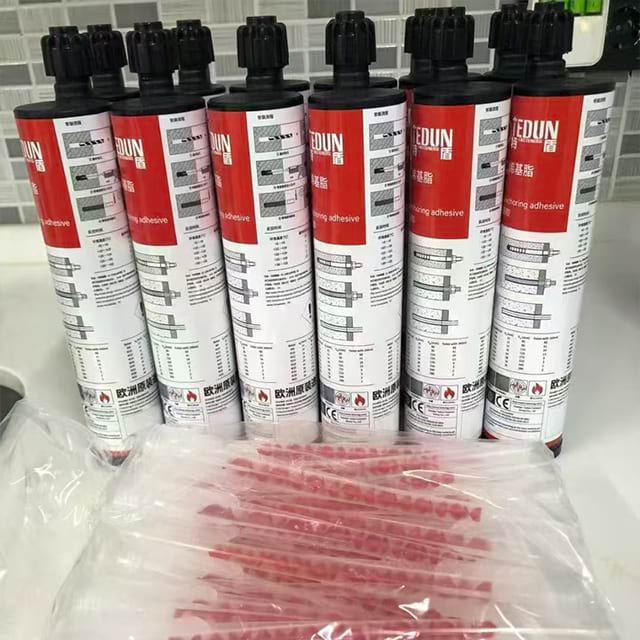
Preparation separates successful installations from catastrophic failures. You must treat preparation as an exact science. Field guesswork leads directly to weak connections. Establish strict engineering parameters before anyone touches a drill.
Establish the absolute authority of the Manufacturer's Printed Installation Instruction (MPII). The MPII supersedes all general industry guidelines. It provides the exact blueprint for success. Hole diameter, drilling depth, and injection volumes must map precisely to the technical data sheet. If project plans conflict with the MPII, consult the structural engineer immediately.
Proper drilling dimensions guarantee adequate chemical volume around the rod.
Diameter Redundancy: Standard practice requires a marginally larger drilled hole. Make the hole typically 1/16" to 1/4" larger than the threaded rod or rebar diameter. This gap provides space for the polymer to form a solid mechanical interlock.
Embedment Depth: Standard depths often run 4.5 times the anchor diameter (4.5D). However, heavy-load or vibratory environments routinely require depths up to 9D. Deeper embedment transfers stress deeper into the concrete mass.
High-quality installation requires specific tools. Do not substitute these items.
Parallel or coaxial dual-cartridge dispensers.
Calibrated nylon or wire brushes matching the hole diameter.
Compressed air nozzles long enough to reach the hole bottom.
Appropriately sized screen tubes for hollow masonry applications.
Consistent application requires a standardized workflow. We recommend posting these steps directly on the job site. Training crews on these specific movements reduces variability. It ensures every anchor reaches its designed load capacity.
Step 1: The "Brush-and-Blow" Debris Purge
Dust acts as the primary enemy of chemical adhesion. It creates a barrier between the polymer and the concrete wall. Execute a rigorous cleaning sequence. First, blow compressed air to the absolute bottom of the hole. Next, vigorously scrub the walls utilizing a fitted wire brush. Finally, blow out the dust again. Repeat this entire cycle a minimum of three times. Never use a shop vacuum alone; it cannot dislodge caked dust.
Step 2: Cartridge Preparation and Purging
Proper cartridge handling prevents unmixed chemicals from entering the hole. Load the dual-component cartridge properly. Keep the label facing downward. This operational tip lets operators monitor the remaining volume easily. Never inject the first pull of the trigger into your drilled hole. Instead, perform a waste purge. Dispense a preliminary bead onto scrap material. Wait until the black and white components merge into a consistent, streak-free gray. Streaks indicate improper mixing.
Step 3: Bottom-Up Injection Technique
Trapped air pockets destroy load capacity. Insert the mixing nozzle deeply. Push it to the absolute bottom of the drilled hole. Slowly withdraw the nozzle while continuously injecting the polymer. Fill volume guidelines vary strictly by manufacturer. Some require 1/4 full, others 5/8 or 2/3 full. Base your fill level entirely on specific displacement calculations found in the MPII.
Step 4: Rod Insertion and Seating
Inspect the steel before insertion. Ensure the threaded rod or rebar is completely free of rust, heavy grease, or dirt. Contaminants act as bond breakers. Push the rod down slowly. Use a continuous twisting motion during insertion. Twisting ensures the chemical threads fully into the steel grooves. It also drives out microscopic air voids. Wipe away any excess material displaced at the surface.
Even perfect installations face risks during the curing phase. Identifying these risks early prevents costly rework. You must actively manage the environment around the newly set anchors.
The single most common point of failure post-installation involves physical disturbance. Crews must never touch the rod before full cure finishes. You must strictly barricade the area. Any torque or lateral load applied prematurely compromises the cross-linking of the polymer chains. Broken polymer chains cannot heal. If someone bumps the rod during the gel phase, you must core it out and start over.
Ignoring substrate temperature leads to severe problems. Concrete temperature often differs vastly from ambient air temperature. Cold concrete drastically extends cure times. Hot concrete accelerates the reaction unexpectedly. This heat can cause premature gelation. The chemical hardens before you can push the rod to the bottom. Always measure the concrete temperature directly. Adjust your working pace accordingly.
Moisture acts as a severe bond-breaker for many standard variants. While some pure epoxies handle damp or water-filled holes, many do not. Standard acrylics often fail entirely under wet conditions. Always verify the exact water-tolerance rating in the MPII. If the site is wet, select a chemistry explicitly engineered to displace water. Never assume a dry-rated product will survive damp conditions.
Selecting and applying these chemical systems represents a strict engineering process. It is never a simple fastening task. The integrity of the final hold relies equally on specifying the correct chemistry and executing an uncompromising site preparation protocol. You cannot substitute proper cleaning with stronger chemicals. Both elements must work together perfectly.
Your next steps require precise coordination. Consult your structural engineer to map specific load requirements against technical data sheets. Ensure your procurement team verifies all compliance certifications before purchasing. Finally, mandate strict field training. Crews must understand the selected manufacturer's MPII completely. Rigorous execution guarantees structural safety and long-term performance.
A: Working time is the window you have to inject the adhesive and position the anchor before the chemical begins to harden. Cure time is the total time required before the anchor can safely support a structural load. You cannot apply any torque or weight until the cure time fully elapses.
A: Only if specifically rated for it. Certain heavy-duty pure epoxy formulations are engineered to displace water and cure securely, but standard or fast-curing acrylics may fail under these conditions. Always check the manufacturer's technical data sheet for water-tolerance approvals.
A: Microscopically clean. Residual concrete dust acts as a barrier between the adhesive and the concrete substrate. Failing to follow the "blow-brush-blow" protocol reduces holding capacity drastically. A simple vacuuming is never sufficient to remove fine dust from the concrete pores.
A: Two-part adhesives rely on an exact chemical ratio. Pushing a small amount through the mixing nozzle onto scrap material ensures the hardener and resin are fully blended. A uniform, streak-free color indicates proper mixing. Skipping this step injects unmixed, weak chemicals into the hole.