

Views: 0 Author: Site Editor Publish Time: 2026-05-15 Origin: Site


Modern construction and heavy manufacturing face a persistent structural challenge. You must carefully balance structural integrity against material weight and labor expenses. Over-engineering a project using traditional I-beams introduces unnecessary dead weight. It also creates severe assembly bottlenecks on the job site. Engineers frequently specify massive profiles out of habit. This practice inflates project budgets and slows down overall progress. Industry professionals need a smarter, leaner approach to framing and support systems. This article provides an evidence-based evaluation of C Channel Steel. We will detail exactly where its impressive strength-to-weight ratio offers the highest return on investment. You will learn about its core functional limitations and how to mitigate them during the drafting phase. We also explain how to specify the exact right profile for demanding commercial applications. By understanding these engineering principles, you can simplify assembly lines, cut down on wasted materials, and build more resilient structures.
C Channel Steel significantly reduces structural dead weight and installation time compared to I-beams by offering three flat mounting surfaces that eliminate the need for secondary angle brackets.
Its open-section design prevents moisture accumulation, making it structurally superior to hollow tube profiles in environments prone to corrosion.
While highly versatile, engineers must account for lateral buckling risks under heavy axial compression and structural creep at temperatures exceeding 752°F (400°C).
Partnering with an advanced C Channel Steel manufacturer capable of in-line roll forming and pre-punching reduces total project Bill of Materials (BOM) and labor costs.
Engineers consistently face tough decisions regarding primary framework components. Standard I-beams offer incredible load-bearing capacity for massive open spans. However, they bring substantial dead weight to any project. We evaluate these profiles using a strict features-to-outcomes framework. By moving the central web to one side, manufacturers create three flat mounting surfaces. This simple geometric shift provides a massive advantage over I-beams. It drastically simplifies parallel mounting. You do not need extra bracketry or complex welding jigs to attach panels. Fewer connection components mean significantly faster assembly times. It directly cuts down labor hours on the construction site.
Next, we must compare it against closed tube steel. Square and rectangular hollow sections look sleek. They provide excellent torsional rigidity across multiple axes. Unfortunately, closed profiles trap moisture easily. Day-to-night temperature swings cause condensation to build up inside the hidden cavity. This trapped water accelerates internal rust. You cannot easily see or fix this degradation until a structural failure occurs. Conversely, open profiles ensure rapid drainage in damp environments. You can easily perform quick visual inspections for routine safety maintenance.
Let us examine the performance characteristics closely. This structural shape delivers high longitudinal strength alongside moderate torsional rigidity. Industrial steel materials generally exhibit a 25% to 30% elongation before catastrophic failure. Following Hooke's Law, this elasticity provides a critical visual warning prior to collapse. The structure will visibly bend, yield, or sag long before it snaps. This built-in safety margin protects human life and physical assets during extreme overload events.
Profile Type | Key Structural Feature | Primary Engineering Outcome | Ideal Application Scenario |
|---|---|---|---|
I-Beam | Central web, symmetrical flanges | Maximum load-bearing over unbraced spans | High-rise building cores, heavy bridges |
Closed Tube Steel | Enclosed rectangular or square cavity | High multi-axis torsional rigidity | Aesthetic columns, low-moisture indoor frames |
C Channel Steel | Offset web, three flat mounting surfaces | Rapid assembly, no hidden rust points | Commercial wall studs, vehicle chassis, trailers |
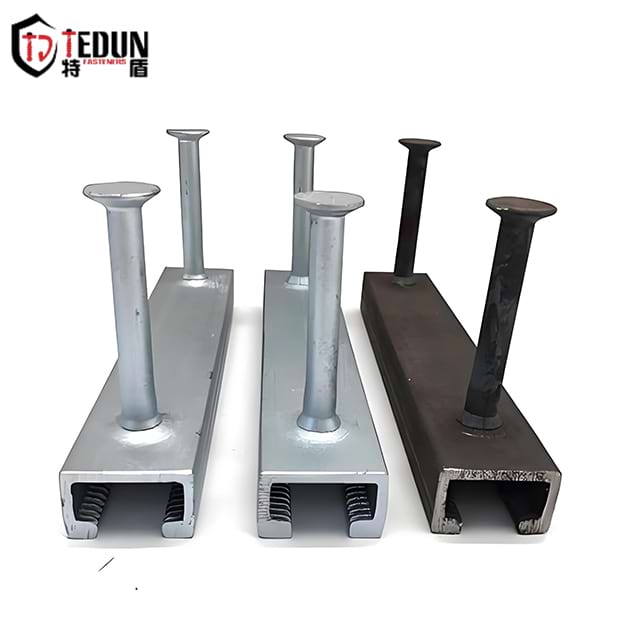
Specific industries benefit immensely from shifting away from solid, overly heavy profiles. We identify four clear solution categories where this material consistently wins out over legacy options.
Commercial Building Frameworks: Construction crews utilize these profiles heavily as wall studs, roof rafters, and floor joists. The flat back web allows drywall or exterior sheathing to mount flush. You will often see "C Purlins" in commercial roofing infrastructure. These unique profiles feature rolled inward lips on the flanges. This minor modification adds significant structural rigidity. They provide exceptional support for heavy metal roof decking across wide factory spans.
Marine and Trailer Manufacturing: Boat trailers submerge constantly in freshwater and saltwater. The open, rapid-draining profile prevents unseen rust. Water flows freely out of the frame the moment you pull the trailer up the boat ramp. It provides a highly durable structural tongue and reliable main frame for safe towing operations.
Vehicle Chassis and Ground Transport: Heavy truck and equipment frames experience intense dynamic torsional stress. Driving over uneven terrain forces the chassis to twist. Rigid box tubing often fractures under these shifting, dynamic loads. The open channel design absorbs engine torque through allowable, calculated flex. It bends slightly without breaking, ensuring vehicle longevity.
Renewable Energy Infrastructure: Solar panel arrays require sturdy ground piles to withstand the elements. These steel profiles offer a very high friction surface when crews drive them deep into the soil. They provide excellent wind-load resistance. The design prevents the solar arrays from lifting during violent storms without adding excessive top weight.
You must evaluate structural materials from a Design for Manufacturing (DFM) perspective early in your project. Choosing the wrong metal grade or fabrication method causes severe budget overruns downstream.
Hot-Rolled Carbon Steel gives you the absolute highest strength-to-cost ratio. Steel mills roll this material at extremely high temperatures above its recrystallization point. We use it primarily for heavy-duty structural support. The aesthetic finish is entirely secondary here, as the surface may appear scaly. Cold-Rolled Steel undergoes progressive forming at room temperature. This specialized process ensures extremely tight dimensional tolerances. You get a much smoother surface finish. Precision framework and automated assembly lines require this level of exactness. Galvanized and Stainless options are mandatory for harsh environments. High-humidity, marine, or exterior applications require robust zinc coatings or chromium alloys to prevent rapid environmental degradation.
Let us compare fabrication methods. Roll forming and extrusion operate very differently. Extrusion forces heated metal through a shaped die, which is common for aluminum but difficult and expensive for high-strength steel. Continuous roll forming passes flat metal coils through sequential bending stands. This method allows engineers to specify significantly thinner materials. This strategy is known as using a "drop gauge." It cuts overall weight without sacrificing critical yield strength. Roll forming also integrates secondary processes directly into the active production line. A top-tier C Channel Steel manufacturer will integrate pre-punching or custom slotting seamlessly. This capability enables Unistrut-style assembly right off the delivery truck. Doing this cuts expensive downstream manual fabrication costs significantly.
Material Category | Manufacturing Characteristic | Best Fit Application | Primary Limitation |
|---|---|---|---|
Hot-Rolled Carbon Steel | Formed above recrystallization heat | Heavy structural support, hidden framing | Rough surface finish, looser tolerances |
Cold-Rolled Steel | Formed at room temperature | Precision equipment framing, automated tracks | Higher base material cost |
Galvanized Steel | Zinc-coated through hot-dipping | Outdoor solar racks, agricultural buildings | Welding requires specialized fume extraction |
Stainless Steel | High chromium alloy composition | Marine environments, food processing plants | Highest initial material cost |
Every structural material has strict physical boundaries. We must view these project implementations through a skeptical-friendly lens to prevent critical failures. Ignoring these limits leads to structural creep, twisting, or sudden collapse under pressure.
Thermal Vulnerability remains a primary concern for any steel framework. Steel begins to experience structural creep at elevated temperatures. The metal's cellular structure changes slightly. It rapidly loses yield strength once temperatures exceed 752°F (400°C). High-heat industrial facilities or fire-rated commercial applications need specific passive fire protection. You must use specific drywall isolation techniques. Alternatively, you can apply thick intumescent coatings to delay heat transfer during an emergency.
Buckling under axial compression happens frequently when designers misuse the profile. Engineers sometimes specify very thin, deep channels as primary vertical columns. Due to their asymmetrical cross-section, these profiles are highly susceptible to lateral-torsional buckling. The beam attempts to twist out of the way of the downward force. You must respect strict unbraced span limits to maintain building safety.
Corrosion Management requires ongoing attention and strategic planning. While open profiles drain trapped water perfectly, they leave more surface area exposed to ambient humidity. You must establish routine inspections of all stress points.
Implement Horizontal Bracing: Always install horizontal girts between vertical columns. This breaks up the unbraced length and effectively stops lateral-torsional buckling.
Specify Intumescent Coatings: Apply certified fire-retardant paint to exposed steel columns in commercial buildings to delay structural creep past 752°F (400°C).
Conduct Regular Weld Inspections: Schedule bi-annual visual checks on joints in harsh outdoor environments. Pay special attention to heat-affected zones near welds.
Utilize Zinc-Rich Primers: Treat all cut ends and drilled holes immediately on the job site to maintain the integrity of galvanized profiles.
Selecting the right fabrication partner ensures overall project success. Standard catalogs rarely provide the specific geometries required for optimized structural engineering. You need a reliable shortlisting logic for procurement to avoid supply chain disruptions.
First, evaluate their in-line processing capabilities. Can the partner provide seamless CAD-to-CNC integration? A modern facility should accept your digital models directly. They should execute pre-punching, slotting, and custom cut-to-length services on the fly during the rolling process. This automated integration directly reduces your manual site labor. Your installation crew simply bolts the pieces together instead of measuring and drilling on-site.
Next, closely check their tolerance consistency. Verify their heavy machinery capabilities. They must handle high-yield structural steel alloys with absolutely minimal twisting. They should prevent bowing or cambering across very long spans. Inconsistent tolerances cause severe alignment issues during final assembly.
Finally, carefully review their material sourcing and compliance protocols. Ensure they provide clear, traceable mill test reports (MTRs) for every batch. These vital documents validate the exact steel grade, tested yield strength, and surface finish consistency. Without MTRs, you cannot legally guarantee the structural integrity of your building.
Your next step is clear and actionable. Move away from rigid standard catalogs. Schedule a "Design for Manufacture" consultation early in your drafting phase. Explore custom roll-formed profiles to optimize your overall project weight and speed up assembly.
C Channel Steel is not a universal replacement for heavy-span I-beams. However, it stands as the absolute most efficient choice for light-to-medium structural framing. It dominates dynamic load environments like vehicle chassis and heavily pre-fabricated assemblies. By utilizing its three flat mounting surfaces, you can drastically reduce component complexity and site labor. Its open design actively fights internal corrosion, ensuring long-term project durability.
We urge engineering and procurement teams to review their current structural schematics today. Look closely at your Bill of Materials for redundant angle brackets or overly heavy closed tube steel. Consult directly with a trusted roll-forming partner for a custom manufacturing assessment. A minor adjustment to a "drop gauge" profile can yield massive savings in both weight and capital.
A: Standard profiles have straight, parallel flanges extending from the main web. C purlins feature flanges with specific inward-turned lips. This minor design modification adds significant rigidity, making purlins ideal for commercial roofing and wide-span panel support.
A: It handles medium axial loads well but requires engineered lateral bracing (girts) to prevent lateral-torsional buckling. For immense, unbraced vertical loads over long spans, symmetrical H-beams or I-beams remain the safest industry standard.
A: The open-web design prevents moisture and condensation from becoming trapped inside a hidden internal cavity. This open structure allows for rapid drainage, quick air drying, and much easier visual rust inspection during routine maintenance.